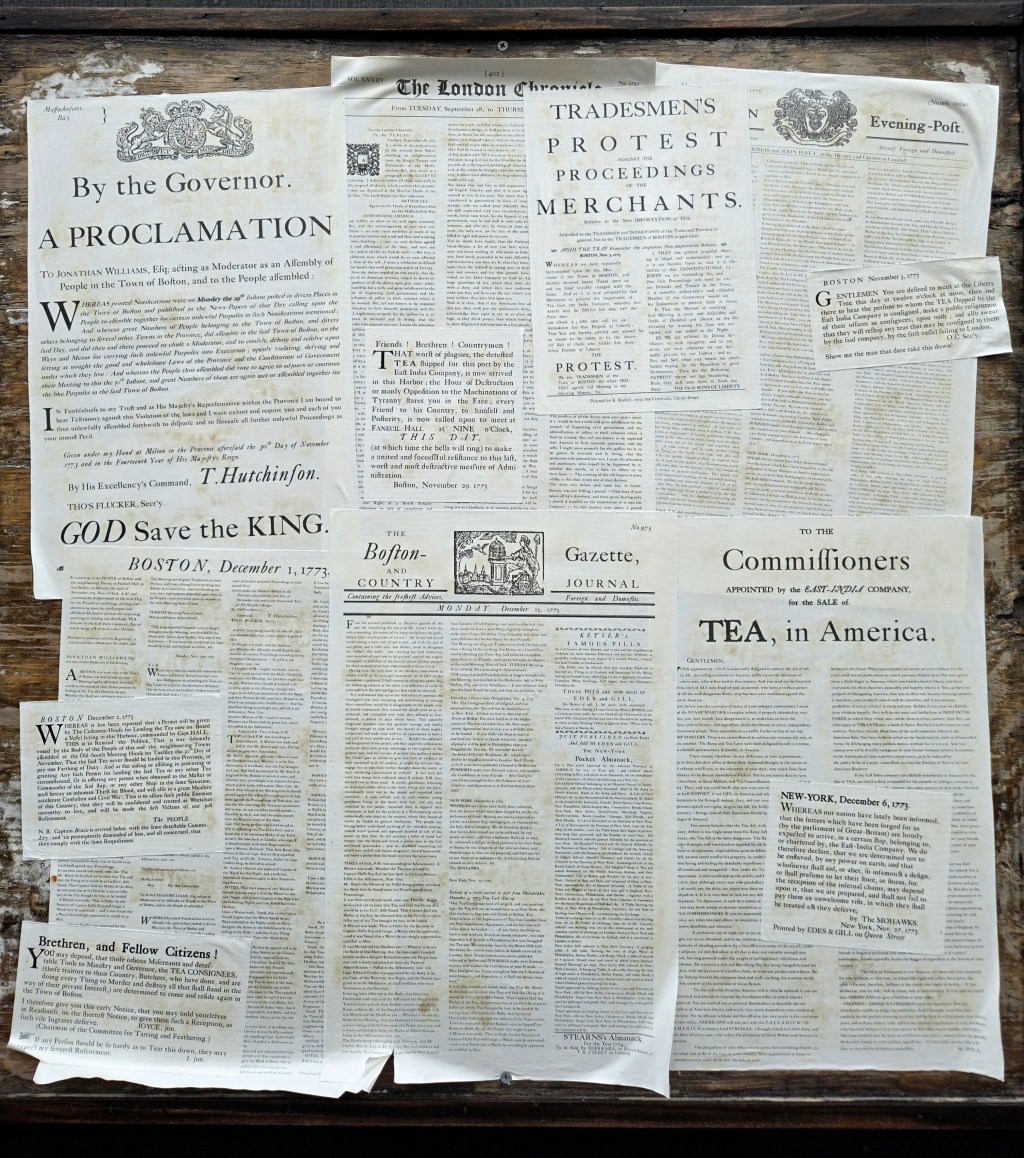
Most people can point to the Boston Tea Party as the spark that set off the powder keg of the American Revolution. Many even know the “no taxation without representation” tagline.
But through my research and trip to Boston, I learned how much more complicated things were.
Yes, in theory, the taxes were to pay for the costs of the Seven Years War (aka The French and Indian War), but they were also a means to keep the American colonies under the thumb of the British government.
Trade was severely restricted. British-paid privateers seized the ships, crew, and cargo of believed smugglers. England discouraged skilled craftsmen from emigrating to the colonies and, instead, sent slaves, prisoners, and indentured servants. Machinery and tools for processing raw goods were kept in England, forcing the colonists to ship all their materials overseas. Then taxes were added on top of everything. Complaints and protests were met with legal restrictions and troops. While some taxes were eventually repealed, the tea tax remained.
With the government sponsored East India Company losing money, the British eliminated the middleman and sent the tea directly to the colonies. The move was designed to undercut the smugglers and save the company from bankruptcy.
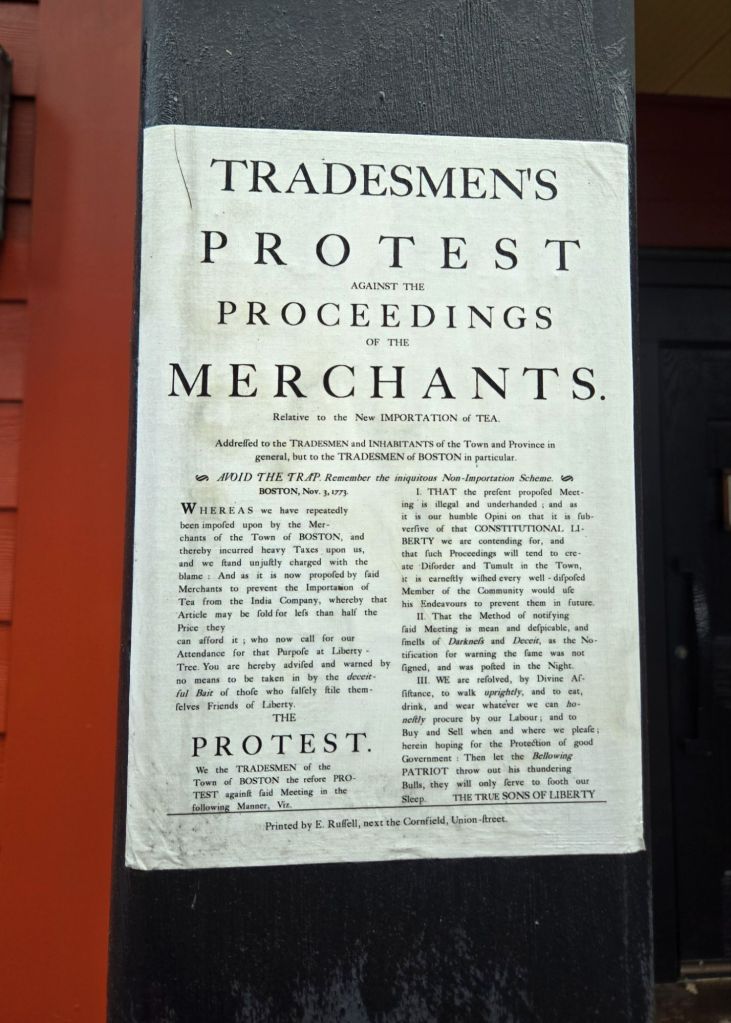
The colonists refused to let the ships unload their cargo. British warships threatened to sink the ships if they left with the tea. The local government, against the requests of the people, decided to seize the tea and force the sale at auction to local loyalists. Stuck between a rock and a hard place, the Sons of Liberty decided to unload the tea themselves.
The rest is history.
Pics are from my Boston trip last year.
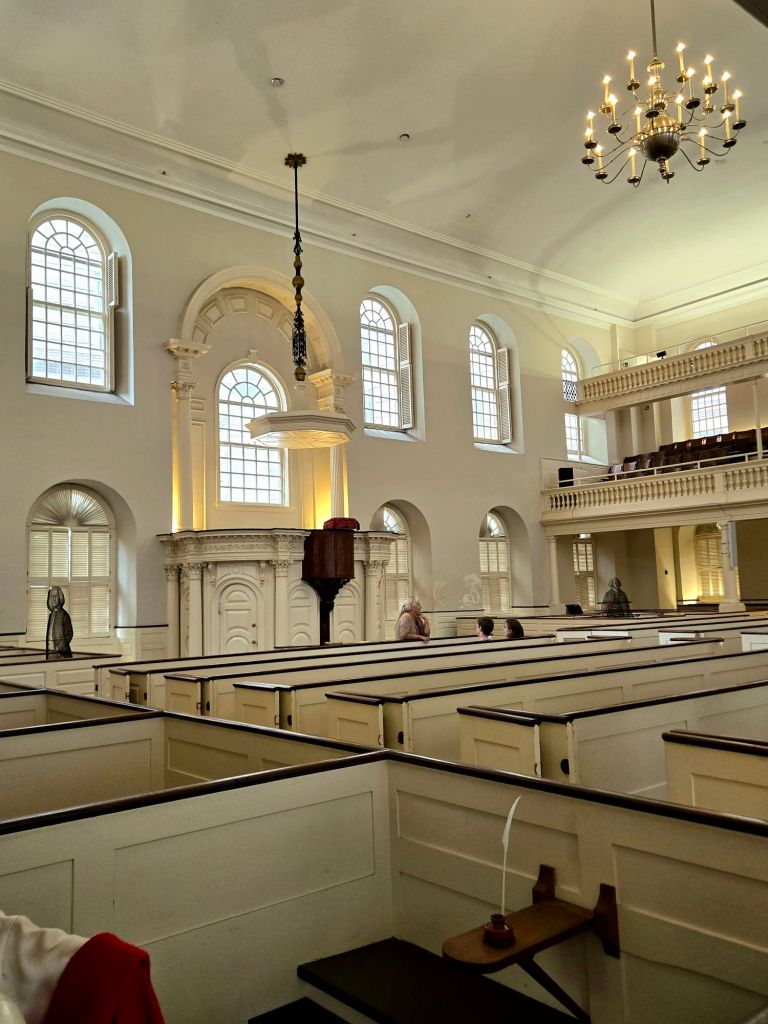
Old South Meetinghouse, the site of the patriot’s last protest attempt and from where the Sons of Liberty left for the tea ships.
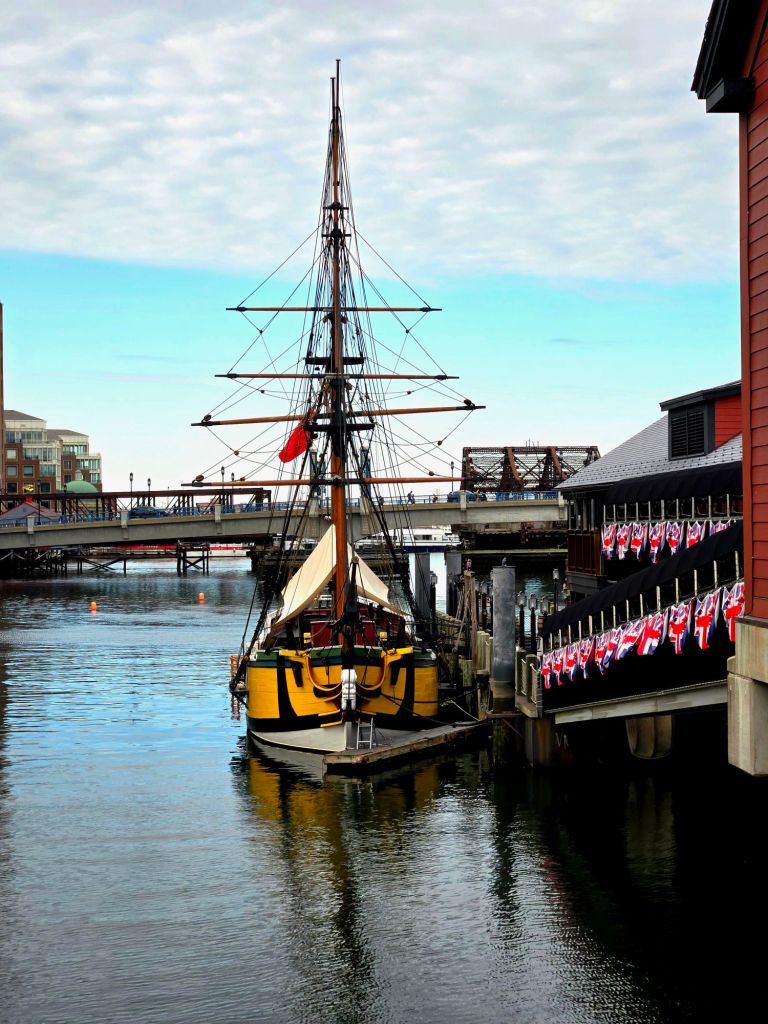
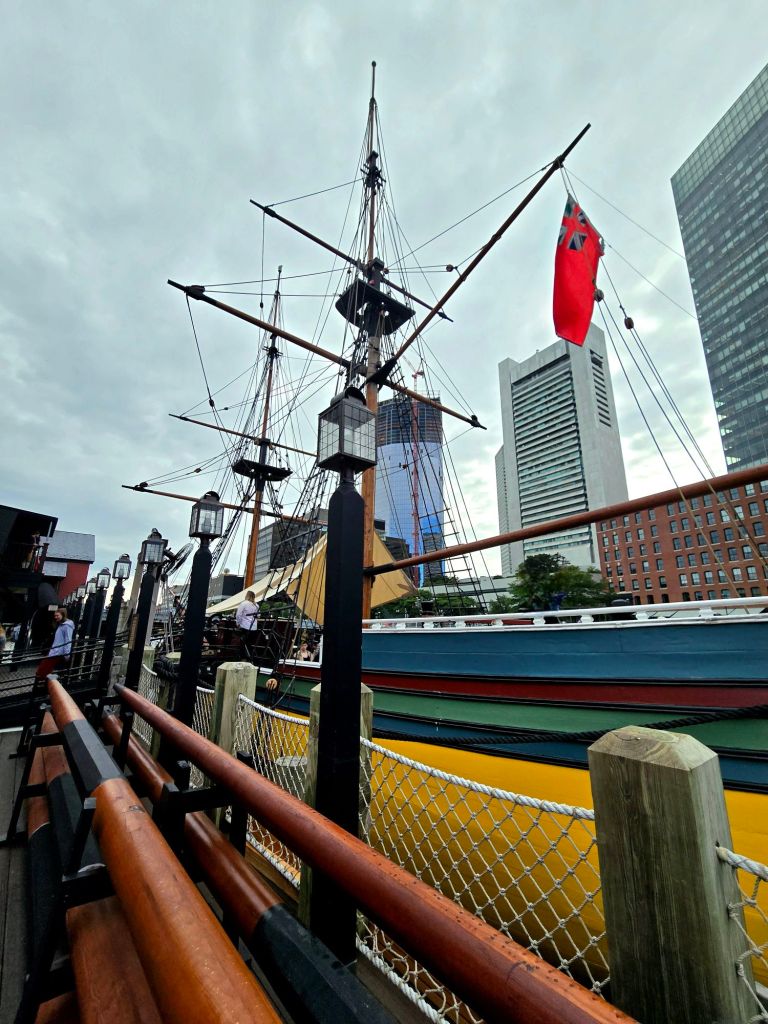
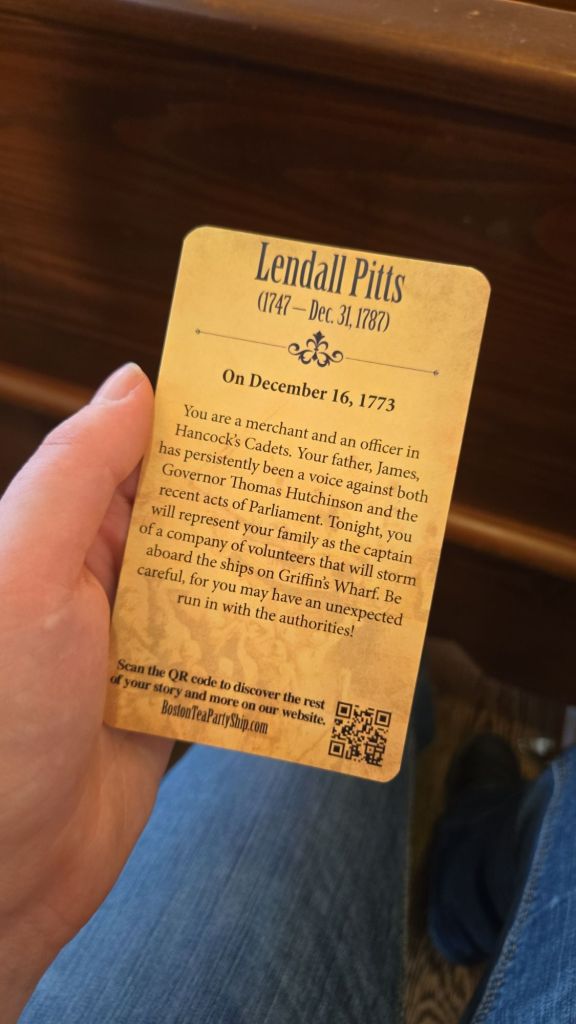
Boston Tea Party Museum (Highly recommend! If you’re in Boston, you need to go.)


 Lakeisha Heeringa
Leave a comment